Wakhati Agri Business Launches Cassava Value Addition Project in West Nile
Wakhati Agri Business Ltd has launched a cassava value addition project in West Nile, Uganda, in partnership with the Department of Environmental Economics and Management at the Robert H. Smith Faculty of Agriculture, Food and Environment.
The project aims to strengthen cassava value addition in West Nile by helping smallholder farmers move from selling raw cassava roots to processing the crop into higher-value products, including High Quality Cassava Flour (HQCF).
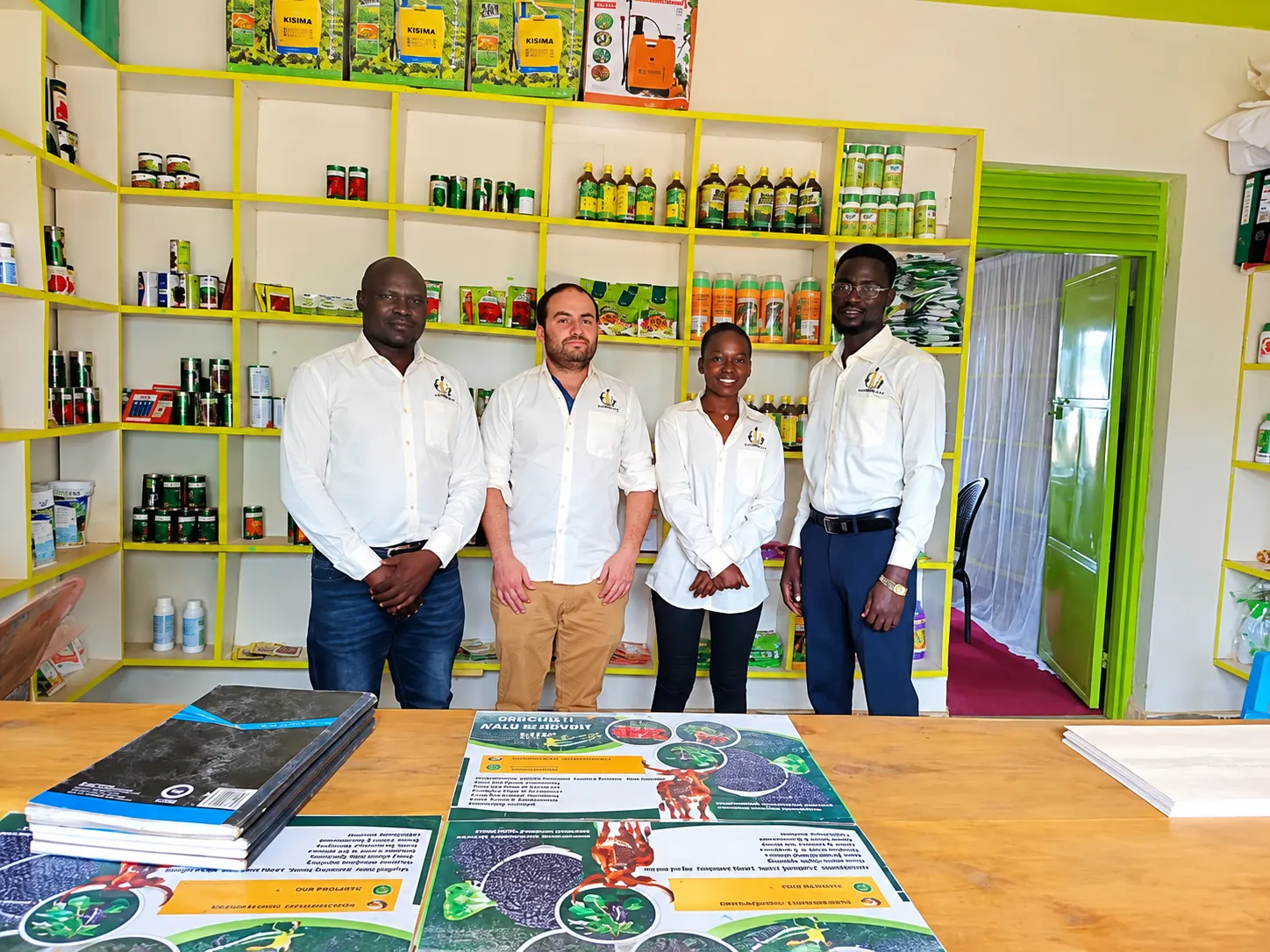
Researchers from the Hebrew University recently visited Wakhati Agri Business Ltd's offices in Adjumani and traveled to farming communities to engage with farmers and assess the challenges and opportunities within the local cassava value chain.
Cassava is widely grown across Adjumani and other parts of West Nile. However, much of the crop is currently sold in its raw form, limiting the amount of value and income farmers can retain from their production.
The new project seeks to address this challenge through the introduction of appropriate cassava processing and drying technologies.
One of the technologies being introduced is an HQCF chipping and grating machine. The mechanized equipment is designed to speed up cassava processing, reduce the amount of manual labour required and increase processing capacity for smallholder farmers.
The project will also introduce solar drying technology to support the production of High Quality Cassava Flour. The solar drying system provides a low-cost method of reducing moisture in processed cassava without relying on conventional energy sources.
Moisture content is an important quality requirement for cassava flour. Laboratory testing by the Uganda National Bureau of Standards (UNBS) indicates that cassava flour should have a moisture content of 12 percent or below.
Achieving the required moisture level through proper drying can enable farmers and processors to produce cassava flour that meets quality requirements and is suitable for commercial buyers, food processors and other markets that require standardized products.
The cassava value addition project is therefore expected to create new opportunities for farmers in West Nile to participate further along the agricultural value chain.
Instead of relying solely on the sale of raw cassava roots, farmers can potentially benefit from processing, drying and producing a market-ready cassava product with greater commercial value.
The partnership also demonstrates the role of agricultural research and technology in addressing challenges faced by smallholder farmers. By combining research, mechanized processing and solar drying, the initiative seeks to develop practical solutions that can be applied within local farming communities.
Wakhati Agri Business Ltd says the collaboration with Hebrew University represents an important step towards strengthening cassava processing and value addition in West Nile.
The initiative could also contribute to the development of West Nile as a cassava value addition and High Quality Cassava Flour production hub, while creating opportunities for farmers to connect with higher-value markets.
The project begins a new phase in efforts to promote cassava value addition, agricultural technology and improved market opportunities for smallholder farmers in West Nile and Uganda.